
Ambedkar Digital Skill-to-Job Programme — Regional Cluster (10 Centres)
Ten centres across a region — 30,000 community members reached, 4,800 youth trained in AI, content, digital marketing and vocational trades, and 2,880 placed or self-employed.
Need Assessment
Large regions of Andhra Pradesh have diverse employment conditions. Industrial corridors, urban centers, agricultural districts, tourism zones and rural communities require different training pathways supported by coordinated regional planning.
Problem Statement
Fragmented training initiatives frequently duplicate courses without considering regional industry demand. Advanced technical courses are difficult to deliver at every location, while placement efforts remain disconnected from major employers and growth sectors.
Solution Architecture
The regional model will create ten interconnected Ambedkar Digital Learning Skill-to-Job Centers supported by a regional programme unit, specialised hub centers, mobile laboratories, employer partnerships and a unified digital monitoring platform.
Key Activities
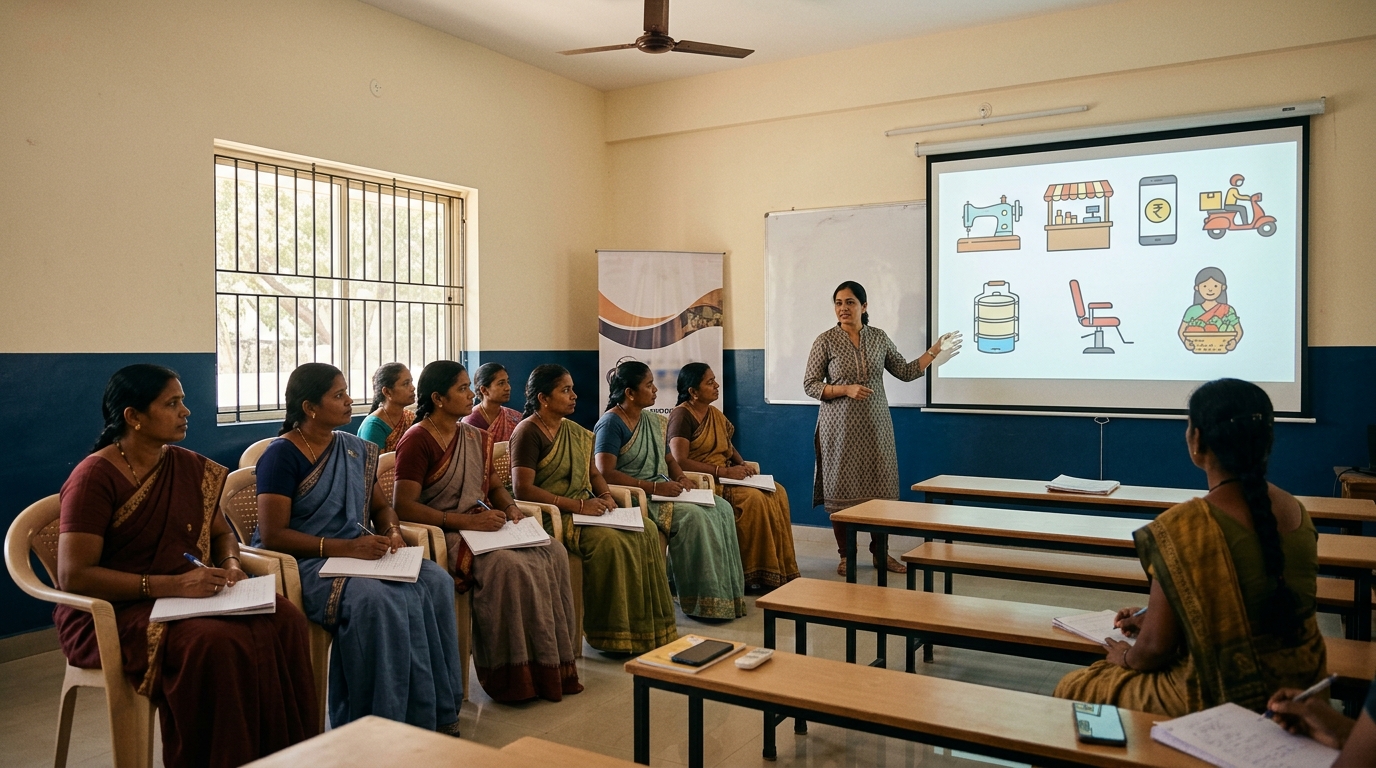
The programme will deliver digital literacy, AI adaptation, cybersecurity awareness, data operations, content creation, digital marketing, drone assembly and maintenance, solar installation, EV charger installation and servicing, electronics, IoT, 3D printing, housekeeping, facility management, healthcare support, logistics, retail, e-commerce, BPO and entrepreneurship.
Expected Outcomes
At least 2,880 beneficiaries will secure jobs, apprenticeships, self-employment or freelance income opportunities. The project will create a region-wide talent pipeline aligned with industries, service-sector employers and emerging green and digital-economy jobs.
Key Performance Indicators
Ten centers operational, 40% women participation, 80% course completion, 75% certification, 60% livelihood conversion, employer partnerships across multiple sectors, measurable income improvement and verified retention.
Monitoring Framework
A regional dashboard will provide center-wise, district-wise, course-wise and gender-wise performance data. Quality audits, trainer observations, financial reviews, beneficiary feedback and employer satisfaction surveys will be conducted periodically.
Risk-Management Framework
Risks include regional coordination gaps, inconsistent quality, outdated curricula, regulatory issues in specialised training and placement-market fluctuations. Mitigation will include standard operating procedures, technical advisory panels, industry-approved curriculum updates, safety certification and diversified employment pathways.
Sustainability Plan
Regional sustainability will be built through anchor-industry partnerships, government convergence, institutional memberships, apprenticeship programmes, employer-sponsored laboratories and revenue from specialised courses offered to commercial and institutional learners.
Planned Outputs
- Ten operational centers
- 30,000 digital-literacy beneficiaries
- 4,800 job-linked trainees
- Regional technical hubs and mobile training facilities
- Employer consortium and apprenticeship network
- Regional job fairs, innovation challenges and entrepreneurship camps
The DPR includes the concept note, need assessment, activities, budget, monitoring framework and reporting schedule. Other deliverables are published quarterly by the Trust's compliance team.
 by
by